
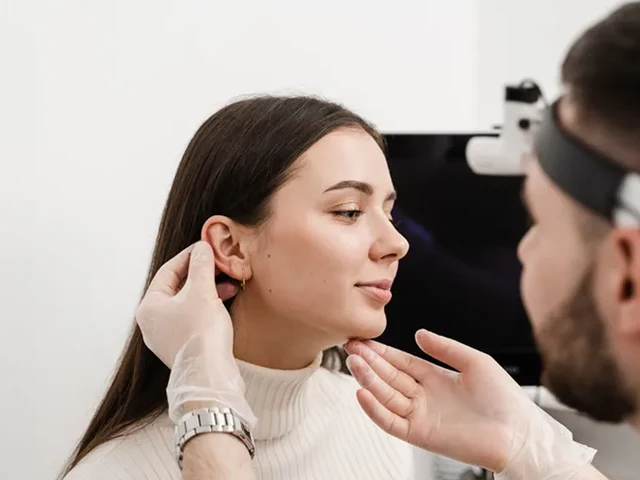
What Is Prominent Ear Surgery (Otoplasty)?
Otoplasty is a cosmetic surgical procedure designed to correct the appearance of the outer ear or create symmetry between the ears. Prominent ears typically occur when the ears genetically protrude more than usual from the head or when the ear cartilage lacks sufficient curvature. While this condition poses no physical health risks, it can lead to a loss of self-confidence, psychological distress, and social adjustment issues, particularly during childhood.
What are prominent ears?
Prominent ears are the most common congenital ear deformity, generally caused by laxity of the cartilage or insufficient folding. This loose structure causes the ear to stick out forward or sideways, creating an undesired appearance. Although it usually affects both ears, some individuals have the condition in only one ear. While women can often conceal the issue by wearing their hair down, this is not typically an option for men; consequently, men seek surgical correction more frequently. Thanks to modern medical advances, this condition—which must be addressed due to its psychological impact—can be easily corrected with relatively simple procedures.
How are prominent ears corrected?
Treatment options vary by age. In infants, a device that holds the ears in a normal position is usually used. In children, whose ears are still growing, a similar device may be applied temporarily. However, correcting prominent ears in adults generally requires surgical intervention. Otoplasty restores the ears to a natural position and typically provides permanent results. The choice of treatment depends on the patient’s age, the severity of the condition, and personal preferences.
How is prominent ear surgery performed?
This simple procedure carries minimal serious risks and must be performed in a hospital setting by a board-certified plastic surgeon. Depending on the patient’s age and the surgeon’s recommendation, local or general anesthesia is used. While the duration depends on the severity of the condition, the surgery generally takes 45–90 minutes and does not require an overnight hospital stay. Depending on the ear structure and the surgeon’s technique, the procedure may be performed through incisions on the front or back of the ear. The underlying cartilage is reshaped as needed, and the ear is repositioned closer to the head. At the end of the surgery, special bandages are applied and typically remain for 1–2 weeks. Incisions are usually placed behind the ear, minimizing visible scarring.
Recovery period for prominent ear surgery
Many patients are curious about the recovery process. For those who prefer to keep their surgery private and return to daily life quickly, this procedure is highly convenient. It is performed quickly, and patients are generally discharged the same day, especially if only local anesthesia was used. The fine sutures used during the procedure are often dissolvable or are removed at a follow-up appointment, and the recovery period takes a maximum of 1–2 weeks. Patients can shower 1–2 days after surgery and typically resume their routine activities within a week. Protecting the ears from trauma during this period is crucial for optimal results. By the end of the process, the protruding appearance is completely eliminated, leaving natural-looking ears. Patients often experience significant psychological relief and satisfaction with their new appearance.
Can children undergo prominent ear surgery?
If prominent ears are detected in infants, using elastic bands under a doctor’s supervision for a few months can often prevent the problem and eliminate the need for future surgery. If this early window is missed, the ideal time for surgery is the preschool years, between ages 4 and 6, when ear development is complete. Correcting the issue during this period prevents children from being teased by peers, allowing for a healthier social and academic experience.