
Teeth Whitening Methods: What Are They and How Is It Done?
A bright, white smile is one of the most noticeable features of a confident appearance. Over time, however, teeth can lose their natural whiteness due to daily habits and lifestyle factors. Even in the most developed countries in the world, about 50% of adults perceive some level of tooth discoloration, with 6% to 8% describing it as severe.
Teeth whitening (also known as dental bleaching) is a popular cosmetic dental procedure that removes surface stains and lightens the natural color of teeth by several shades, helping you achieve a healthier and more attractive smile without damaging the tooth structure.
What Is Teeth Whitening?
Teeth whitening is a professional aesthetic treatment that uses specially formulated bleaching agents to break down and remove discoloration from the porous enamel layer of the teeth. It targets both extrinsic (surface) and intrinsic (internal) stains caused by aging, diet, and other factors. Unlike over-the-counter whitening toothpastes that only clean the surface, professional whitening penetrates deeper for more noticeable and longer-lasting results. The procedure should always be performed or supervised by a dentist to ensure safety and effectiveness.
Why Do Teeth Lose Their Whiteness?
Several factors contribute to tooth discoloration:
– Extrinsic stains: These occur on the tooth surface and are commonly caused by consuming staining foods and drinks such as tea, coffee, red wine, and cola, as well as smoking or tobacco use.
– Intrinsic stains: These develop inside the tooth and are harder to remove. They can result from certain medications (especially antibiotics taken during childhood), excessive fluoride exposure (fluorosis), trauma, or root canal treatments that cause internal darkening.
Aging also plays a role as enamel naturally thins over time, allowing the yellowish dentin underneath to show through more clearly.
When Is Teeth Whitening Used?
Teeth whitening is not a treatment for disease but an aesthetic solution for discoloration. It is particularly effective in cases such as:
- Darkening after root canal treatment (internal bleaching)
- Trauma-related gray or brown discoloration
- Mild to moderate fluorosis
- Antibiotic-induced staining from childhood
- General yellowing due to lifestyle habits
Before whitening, any existing issues like cavities, gum disease, or heavy tartar buildup must be treated first. The procedure is not recommended for everyone, including children with developing teeth, pregnant or breastfeeding women, or individuals with severe sensitivity or cracked enamel.
How Is Teeth Whitening Performed?
The process begins with a thorough dental examination and professional cleaning. There are two main professional methods: In-Office (Clinic) Whitening and At-Home Whitening (Under Dentist Supervision)
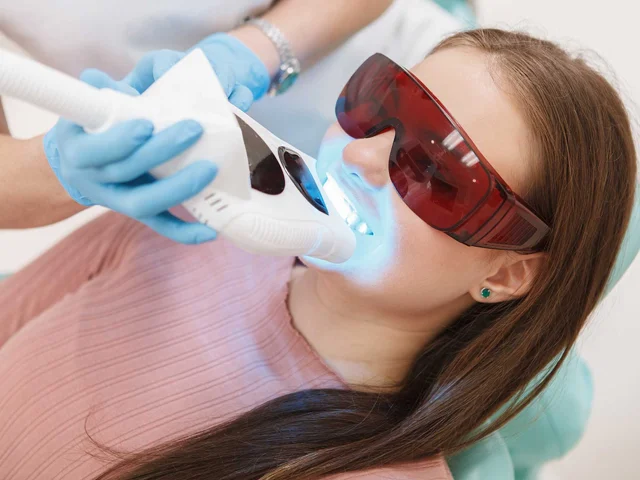
Clinic teeth whitening is the fastest option. The dentist protects the gums with a special barrier, applies a high-concentration bleaching gel to the teeth, and may activate it with a special light or laser. A single session lasting 30–60 minutes can lighten teeth by several shades. It is ideal for those seeking quick, dramatic results.
At dentist supervised at-home whitening, custom-fitted trays are made from impressions of your teeth. You apply a lower-concentration whitening gel provided by your dentist and wear the trays for a few hours daily (or overnight) over 1–2 weeks. This method offers more gradual but controlled whitening and is often more affordable.
Notes About Trendy At-Home Techniques
While many natural remedies like baking soda, lemon, or activated charcoal are popularized online, most dentists strongly advise against them. These substances can be extremely abrasive and damage enamel, leading to increased sensitivity and long-term harm. Over-the-counter whitening strips, pens, and toothpastes can help maintain results or treat very mild stains, but they are less effective than professional treatments.
Aftercare and Results
After whitening, teeth may experience temporary sensitivity, which usually subsides within 24–48 hours. For the first 48 hours, it is recommended to follow a “white diet” — avoiding coffee, tea, red wine, colored sauces, and smoking. Good oral hygiene and regular touch-up treatments help maintain results, which typically last from 6 months to 2 years depending on lifestyle habits.
Teeth whitening is a safe and effective way to boost your smile when performed by qualified professionals. Always consult your dentist to determine the most suitable method for your teeth and to avoid unnecessary risks.